"If you only read the books that everyone else is reading, you can only think what everyone else is thinking. That's the world of hicks and snobs. Real people would be ashamed of themselves doing that."
- Haruki Murakami, Norwegian Wood, page 39
Monday, June 6, 2011

Friday, June 3, 2011
Running and Form, Part Deux
You had some good responses to my post about Running Form, and I thought I’d raise my reply back to the upper level where it’s easier to read.
First of all, Eric mentioned that he first tried to “cure his running woes with technology.” I’d be curious to hear what technology that he used, but from my perspective, it seems to me that running involves two types of technology:1
What may be the answer is missing from this list because it's not a technology. I think that the best way to work on form is to work with another person. In the examples from my original post, the commonality was a coach who not only identified my form issues but also helped me work on and improve them. Having someone work with you to correct imperfections is probably the answer to Eric’s valid question: “what do i do if i've been running WRONG for all these years? just deciding to run with "proper form" (who defines that) isn't going to work, as the legs and leg muscles aren't accustomed to it.” I think it’s an incremental process, and finding a coach/running partner who can guide and experiment with you to find form fixes that work for the runner is a huge factor.
To expand on who defines correct form, I don’t think there’s any single form that will work for everyone. Joel pointed out that Born to Run does “NOT advocate paying attention to particular rules about form. It advocates running joyfully, and listening to your body to determine what is right and wrong.” I agree with this to an extent, but I also think that almost everyone could benefit from tweaks - as long as it works for them. To go back to the story about my arm swing, while my original swing was natural and felt right, and I never would have changed it if someone else hadn’t called me out on it. Changing my running form eventually was the best thing for my body – and enabled me to run faster. Now it wasn’t easy! I needed to start strength training and practice, practice, practice before the new movement came naturally and stuck. But what originally was my natural form was definitely not the best thing for me.
I’m curious to hear more about what you think! As for Born to Run, I’ve heard so much about it, I’m really going to need to pick up a copy. May head over to amazon now...
First of all, Eric mentioned that he first tried to “cure his running woes with technology.” I’d be curious to hear what technology that he used, but from my perspective, it seems to me that running involves two types of technology:1
. Shoes. Not to be discounted! Personally, I need a stable shoe because I pronate and thus need something to prevent my feet from rolling and fucking up my knees. I’m sure there are other ways that shoes could help your form, but that’s the main point I think of.Any other technologies that I’m missing?
This could be expanded to include things like the computer chips included in some of the newer shoes out there – Eric could speak more to the Nike technology in particular – but again I’m not sure how this could help form analysis.
2. Watch/timer. Not sure how this would help out form even if we expand it to GPS devices.
What may be the answer is missing from this list because it's not a technology. I think that the best way to work on form is to work with another person. In the examples from my original post, the commonality was a coach who not only identified my form issues but also helped me work on and improve them. Having someone work with you to correct imperfections is probably the answer to Eric’s valid question: “what do i do if i've been running WRONG for all these years? just deciding to run with "proper form" (who defines that) isn't going to work, as the legs and leg muscles aren't accustomed to it.” I think it’s an incremental process, and finding a coach/running partner who can guide and experiment with you to find form fixes that work for the runner is a huge factor.
To expand on who defines correct form, I don’t think there’s any single form that will work for everyone. Joel pointed out that Born to Run does “NOT advocate paying attention to particular rules about form. It advocates running joyfully, and listening to your body to determine what is right and wrong.” I agree with this to an extent, but I also think that almost everyone could benefit from tweaks - as long as it works for them. To go back to the story about my arm swing, while my original swing was natural and felt right, and I never would have changed it if someone else hadn’t called me out on it. Changing my running form eventually was the best thing for my body – and enabled me to run faster. Now it wasn’t easy! I needed to start strength training and practice, practice, practice before the new movement came naturally and stuck. But what originally was my natural form was definitely not the best thing for me.
I’m curious to hear more about what you think! As for Born to Run, I’ve heard so much about it, I’m really going to need to pick up a copy. May head over to amazon now...
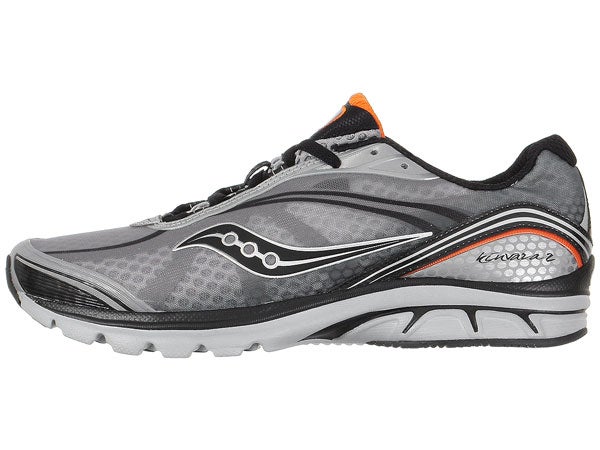
Kinvara 2
My new pair of Kinvara 2's just got delivered last night.

On top of Running Warehouse's everyday low price, they were running a 10% off sale, and I had a 15% off coupon. Since shipping is free, I ended up paying a grand total of $57 for these. Not a bad price for the newly-released update to one of the most popular running shoes of the past year.
I'm taking these down to Richmond this weekend, where I'll give them a spin. Review to come soon.
Thursday, June 2, 2011
Running and Form
I thought that most semi-serious to serious runners took a good look at their form as part of the process of becoming a serious runner. However, the article about running form in the June 2011 issue of Runners World makes it sound like this is not the case; they focus on how form is kind of a red-headed stepchild in the sport and focus on how the “barefoot running” trend is sparking a newfound interest in form.
While I’m sure that barefoot running is helping people's form, I'll offer a rebuttal about the lack of form focus in the past in the form of a personal anecdote about my softmore days at Essex Junction High School (the good ‘ol days of 1987). Before that, I was run as a social thing, not really training or preparing for races in favor of jogging around town while laughing with my friends. That all changed when my Cross Country (XC) coach, an excellent man named Steve Dowd, called me and my friends out on our lackadaisical ways. He insisted that we could unleash our talent if only we were more focused, and the way he challenged us resonated with me, and I started working harder during training.
I slowly became a much better runner, but I didn’t really take the next step until one Saturday when our coaches videotaped us running across a field. Watched the tape later that week, we looked at my form and the coaches pointed out what was good and what was flawed. They were mainly upper body related: my right arm was not only situated significantly lower than my left, but it was also swinging down and out much more that the other arm. This was a big deal for me because I had had no idea that I was doing anything incorrectly, so simply staying more conscious of my arms during my runs enabled me to become faster and more efficient.
Another big benefit of having coaches work with us on form came when they pointed out that the slapping sound of feet hitting pavement was the sound of wasted energy, and that the trick to avoid this was to roll your foot so that you didn’t lose any energy in the transfer of foot to ground. All this contributed to me being much more mindful of my form and thus significantly reducing the amount of energy I was wasting with each stride.
I write all of this to say that I’m surprised that RW considers the focus on form to be a new thing, since my experience is much different, and that I find form focus to be a significant factor in not only the success I’ve had running races but also in keeping relatively healthy. What do you think? Do you pay attention to your form? When did you start doing so and was it worth it?
While I’m sure that barefoot running is helping people's form, I'll offer a rebuttal about the lack of form focus in the past in the form of a personal anecdote about my softmore days at Essex Junction High School (the good ‘ol days of 1987). Before that, I was run as a social thing, not really training or preparing for races in favor of jogging around town while laughing with my friends. That all changed when my Cross Country (XC) coach, an excellent man named Steve Dowd, called me and my friends out on our lackadaisical ways. He insisted that we could unleash our talent if only we were more focused, and the way he challenged us resonated with me, and I started working harder during training.
I slowly became a much better runner, but I didn’t really take the next step until one Saturday when our coaches videotaped us running across a field. Watched the tape later that week, we looked at my form and the coaches pointed out what was good and what was flawed. They were mainly upper body related: my right arm was not only situated significantly lower than my left, but it was also swinging down and out much more that the other arm. This was a big deal for me because I had had no idea that I was doing anything incorrectly, so simply staying more conscious of my arms during my runs enabled me to become faster and more efficient.
Another big benefit of having coaches work with us on form came when they pointed out that the slapping sound of feet hitting pavement was the sound of wasted energy, and that the trick to avoid this was to roll your foot so that you didn’t lose any energy in the transfer of foot to ground. All this contributed to me being much more mindful of my form and thus significantly reducing the amount of energy I was wasting with each stride.
I write all of this to say that I’m surprised that RW considers the focus on form to be a new thing, since my experience is much different, and that I find form focus to be a significant factor in not only the success I’ve had running races but also in keeping relatively healthy. What do you think? Do you pay attention to your form? When did you start doing so and was it worth it?
the next 'Great American Novel'?
i'll save you the suspense; American Rust by Philipp Meyer is *not* in the same class as, say, Steinbeck's Grapes of Wrath. But is it worth reading?
i snatched up this book after catching a Steinbeck comparison. Steinbeck is one of my carefully calculated "TOP 5 BEST" authors; so the comparison alone puts the book on auto-purchase.
it usually takes me 50-100 pages to settle into a book, form an opinion. American Rust was a quick read, i think 3 nights, and i wasn't aware of how much i read in a particular sitting... the book really was engaging. the NATURE of the engagement was somewhat strange, however...
let me provide some background. the book tells the story of a few residents of a past-its-prime mill town in Pennsylvania. unemployment, lack of jobs, lack of hope leading to more crime, drugs, depression... a story we, as Americans, have heard before and know quite well. the key event of this book is a murder, after one of two twenty-something boys, both of whom have not lived up to their post-high school potential, find themselves in a tricky situation with some vagrants (due to some bad decisions they made) and end up killing one of them. the ripple effect of this event is told to us from the unique and personal experiences of the mother of one of the boys, that mother's love interest and local police chief, the father and sister of the other boy and the two boys themselves.
i found the unique perspectives to be quite enlightening in terms of how they related to the overall plot. a certain level of honesty was built into the motivations for actions we might otherwise read about and dismiss as "yeah, i figured that". an example:
"A guilty thought came to him: it would have been better if the boy had died -- she'd be able to move on, believe what she wanted. Now the boy both existed and didn't exist, he was there but being kept from her, she would never be able to stop thinking about him. The only torch she could carry."
these are the thoughts of a local police chief, interested in a boys mother after that boy has had a life-threatening situation, while being held on murder charges. the thought itself isn't riveting, but it is this kind of writing that makes the book all the more real. the man's feelings for the mother clearly motivate him more than his feelings about her son, both of whom he is intimately involved with in very specific ways.
too, the writing style is very stream-of-consciousness:
"This wind, he thought. Should have hung on to the coat and hat. Maybe I'm not really that cold, just hungry and tired. But you ate last night, that's enough calories. One day is nothing. Figure out your bearings. I am having trouble thinking. That is my problem. Should have stopped to eat but I didn't feel safe."
this kind of writing works well, in my opinion, when you're engaged in a book... as if the thoughts where occurring in your own mind.
like i said, i really was engaged in the book, i could barely put it down. but i didn't necessarily care about the words on the page, rather, i just wanted to know what happened. like reading a newspaper.
i think Philipp Meyer's writing is good... but despite the painstaking detail built into this story using the many perspectives, i didn't find it to be all that deep. i didn't particularly like or dislike any of the characters, although i will say Poe (one of the boys) certainly steals the show in terms of who matters most (to me anyway). the book WAS very American in it's feel... but it lacks wisdom, lacks the well worn feel of American Literary standouts. but hey, this is his first published book... so i'm definitely keen to read what he comes up with next.
overall, i liked the book. i would recommend it to others. but it's not a "Great American Novel" as some have touted. it's a good, american read.
i snatched up this book after catching a Steinbeck comparison. Steinbeck is one of my carefully calculated "TOP 5 BEST" authors; so the comparison alone puts the book on auto-purchase.
it usually takes me 50-100 pages to settle into a book, form an opinion. American Rust was a quick read, i think 3 nights, and i wasn't aware of how much i read in a particular sitting... the book really was engaging. the NATURE of the engagement was somewhat strange, however...
let me provide some background. the book tells the story of a few residents of a past-its-prime mill town in Pennsylvania. unemployment, lack of jobs, lack of hope leading to more crime, drugs, depression... a story we, as Americans, have heard before and know quite well. the key event of this book is a murder, after one of two twenty-something boys, both of whom have not lived up to their post-high school potential, find themselves in a tricky situation with some vagrants (due to some bad decisions they made) and end up killing one of them. the ripple effect of this event is told to us from the unique and personal experiences of the mother of one of the boys, that mother's love interest and local police chief, the father and sister of the other boy and the two boys themselves.
i found the unique perspectives to be quite enlightening in terms of how they related to the overall plot. a certain level of honesty was built into the motivations for actions we might otherwise read about and dismiss as "yeah, i figured that". an example:
"A guilty thought came to him: it would have been better if the boy had died -- she'd be able to move on, believe what she wanted. Now the boy both existed and didn't exist, he was there but being kept from her, she would never be able to stop thinking about him. The only torch she could carry."
these are the thoughts of a local police chief, interested in a boys mother after that boy has had a life-threatening situation, while being held on murder charges. the thought itself isn't riveting, but it is this kind of writing that makes the book all the more real. the man's feelings for the mother clearly motivate him more than his feelings about her son, both of whom he is intimately involved with in very specific ways.
too, the writing style is very stream-of-consciousness:
"This wind, he thought. Should have hung on to the coat and hat. Maybe I'm not really that cold, just hungry and tired. But you ate last night, that's enough calories. One day is nothing. Figure out your bearings. I am having trouble thinking. That is my problem. Should have stopped to eat but I didn't feel safe."
this kind of writing works well, in my opinion, when you're engaged in a book... as if the thoughts where occurring in your own mind.
like i said, i really was engaged in the book, i could barely put it down. but i didn't necessarily care about the words on the page, rather, i just wanted to know what happened. like reading a newspaper.
i think Philipp Meyer's writing is good... but despite the painstaking detail built into this story using the many perspectives, i didn't find it to be all that deep. i didn't particularly like or dislike any of the characters, although i will say Poe (one of the boys) certainly steals the show in terms of who matters most (to me anyway). the book WAS very American in it's feel... but it lacks wisdom, lacks the well worn feel of American Literary standouts. but hey, this is his first published book... so i'm definitely keen to read what he comes up with next.
overall, i liked the book. i would recommend it to others. but it's not a "Great American Novel" as some have touted. it's a good, american read.
May lookback
Even though they stumbled at the end, the Red Sox logged 19 wins and 10 losses for the month of May. That puts them tied with Arizona for the best record for the month.
296 hits - 1st in the majors
156 runs - 1st in the majors
39 home runs - tied for 1st in the majors
.287 team batting average - 1st in the majors
.472 slugging percentage - 1st in the majors
Despite Beckett's run, the pitching staff still has some catching up to do. They managed only a cumulative 4.01 ERA, which puts them 21st in the majors for the month. They did lead the AL in strikeouts (214), but they were also second in the AL in walks (102).
Defensively, opponents stole 31 bases against the Red Sox, which is the most in the majors against any team.
All of the above has certainly made for some dramatic baseball!
Wednesday, June 1, 2011

Subscribe to:
Posts (Atom)